Population ageing is profoundly reshaping the French economy. At the national level, people aged 65 and over account for around 21% of the total population in 2024. This trend is affecting the available workforce and intensifying pressures on the labour market. In Normandy, this dynamic is even more pronounced.
The region has an older population than the national average and more moderate demographic growth. Reindustrialisation firmly rooted in the region While reindustrialisation has been a national priority for several years, in Normandy it takes on a particularly visible form.
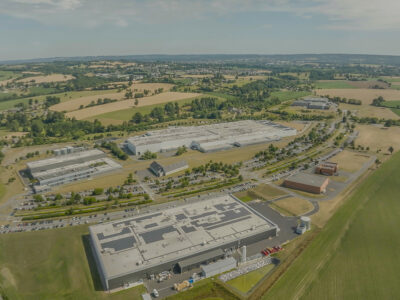
The region stands out as one of France’s major industrial territories, with around 205,000 industrial jobs – representing 17% of regional salaried employment – supported by several structural strengths:
- The HAROPA port axis (Le Havre – Rouen – Paris) •
- Strong industrial sectors: energy, nuclear, shipbuilding, chemicals, agri-industry
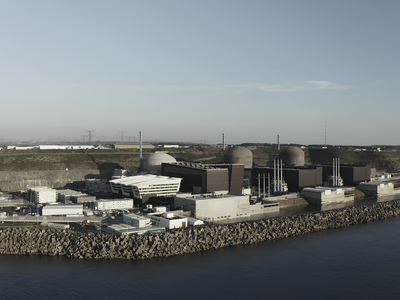
Major industrial and energy projects (such as the Penly EPR) Normandy companies are adapting through training From Dieppe to Granville, via Évreux and Alençon, this reindustrialisation is translating into the modernisation of industry, accelerated energy transitions, the rise of digital services, and growing demand for technical and healthcare professions. It is undoubtedly in the field of skills that this transformation of the industrial model is most visible. This shift primarily affects technical roles, which are particularly exposed to recruitment pressures. Welders, boilermakers, maintenance technicians and specialised operators are among the most sought-after profiles, in a context where demand remains high and available skills are limited.
In Normandy, faced with persistent recruitment tensions and a shortage of technical profiles, companies are fundamentally rethinking their approach by directly organising the training of their future employees. Several initiatives are emerging at different levels. Some large companies are structuring their own training pathways through in-house schools, as seen with Naval Group. Others, such as Fouré Lagadec, are investing in continuous training to support the upskilling of their workforce.
At the same time, territorial initiatives such as UIMM Normandie training centres or the Le Havre Metropolitan Production School, which focuses on industrial trades (e.g. metalwork, welding) – are helping to align training provision with local industrial needs.
These examples illustrate a major shift: training is now an integral part of how industry operates. It is organised across multiple levels, company, sector and territory to respond in a coordinated way to skills needs. This paradigm shift reflects a profound transformation of the industrial ecosystem, where skills have become a key strategic issue. Industry is now directly contributing to their development and transmission as well as being anchored within the local economy.