Just a few short years ago, no one would have imagined that a simple shopping net the kind that our grandmothers might have used to bring their groceries back from the market would become one of the trendiest accessories on the streets of Tokyo, Berlin or New York.
And yet… that is exactly what happened.
A story that begins in 1860
Filt was not always synonymous with design and elegance.
Founded in 1860, the Norman company originally produced sturdy nets for fishing and agriculture. Nothing glamorous just local know-how, passed down from generation to generation. For more than a century, the business grew quietly, staying true to its DNA: producing in Normandy, with yarn, machines and skilled hands.
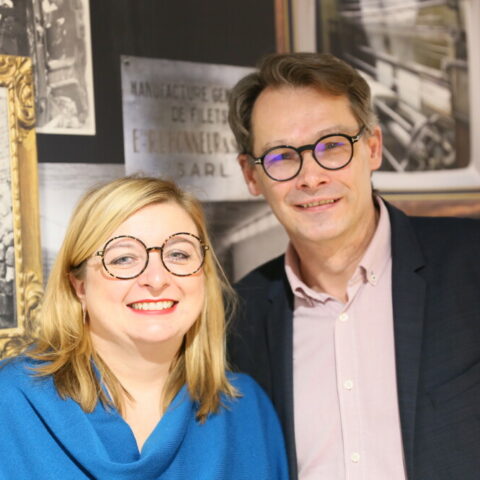
When Catherine and Jean-Philippe Cousin decided to awaken a sleeping beauty
Then came a turning point.
At a time when the French textile industry was in decline, two leaders deeply attached to the brand’s history refused to let this industrial heritage disappear.
They asked a bold question: What if this almost-forgotten net became… a modern everyday object?
It was a risk worth taking. They reworked the design, selected contemporary colours, rethought its uses, and created a lifestyle identity without ever betraying the technical expertise of the Norman workshops.
An object from the past becomes an international icon
The Filt net bag soon appeared on Instagram, was embraced by designers, and stocked by trend-setting boutiques.
Gradually, Filt grew retaining the humility of a Norman company, but with the pride of sharing its know-how across 50 countries.
A success that transforms a region
Today, the company employs seamstresses, technicians and passionate craftspeople,
and even welcomes new talent trained in industrial knitting a rare skill in France.
Context: Heritage & renewal
- The company has existed since 1860 in its original form and underwent several evolutions before adopting the name “Filt” in 1990.
- The arrival of Jean-Philippe and Catherine Cousin in the early 2000s marked Filt’s “reawakening”: the revival of shopping nets, international expansion, diversification and modernisation.
- Under their leadership, the company was awarded the “Entreprise du Patrimoine Vivant” (EPV) label (‘Living Heritage Company’) in 2017 an official state recognition of outstanding French craftsmanship